AI from zero
Fast first output. Context lives in chat. Foundations are rebuilt, boundaries are guessed, and the project becomes harder to continue.
A full-stack enterprise admin scaffold for AI-assisted development with authentication, RBAC, users, roles, menus, and API logs—without losing structure after the first demo.
The hard part begins after the first prompt: modules drift, APIs diverge, decisions disappear, and every new conversation starts from zero.
Fast first output. Context lives in chat. Foundations are rebuilt, boundaries are guessed, and the project becomes harder to continue.
Start from a working full-stack foundation. Structure, contracts, documentation, and verification give every human and AI the same project truth.
“Cyber does not replace AI. It gives AI a reliable place to work.
Scroll through the system—from the operator experience to the contracts and documentation that keep it maintainable.
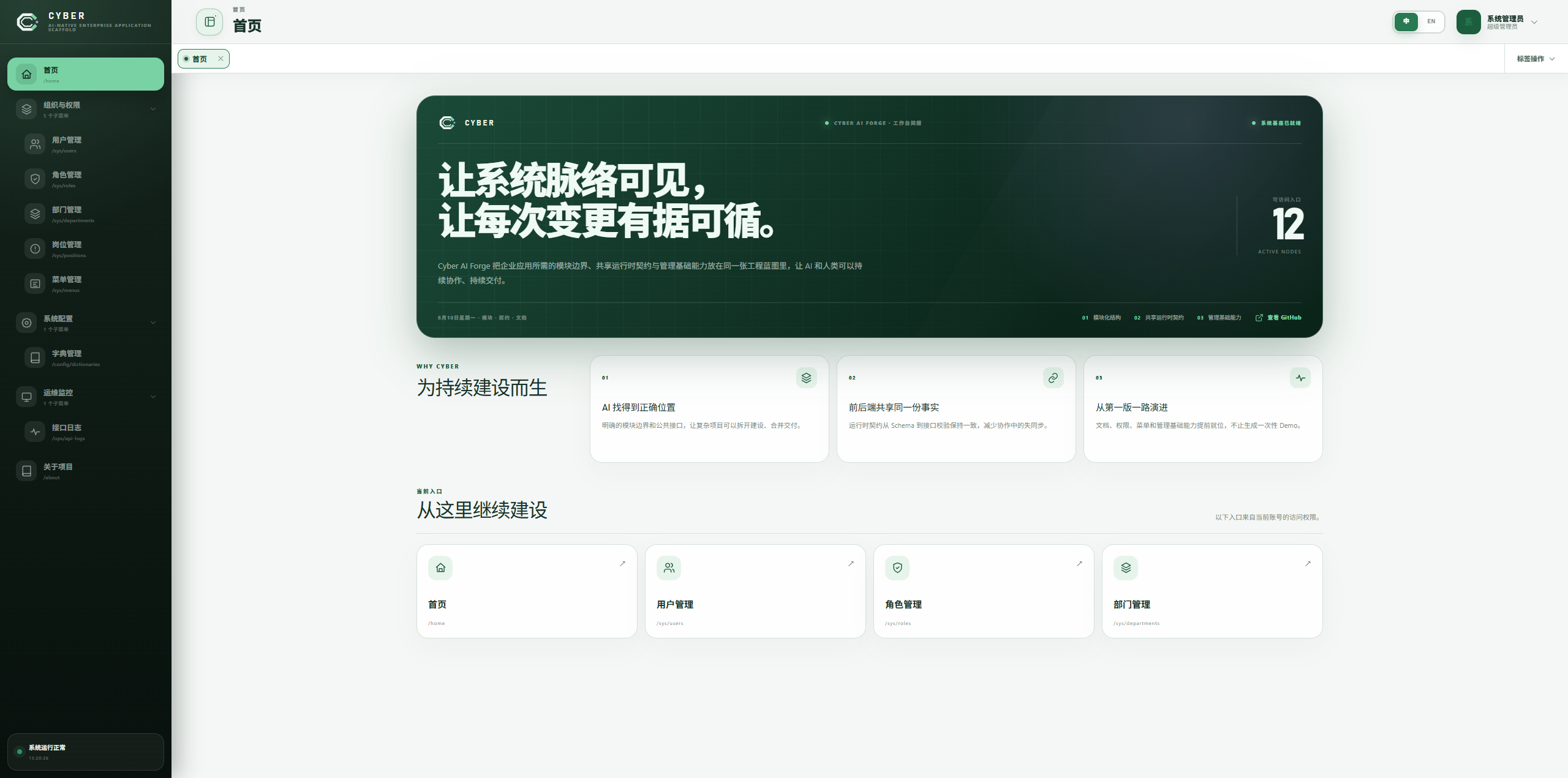
A clear application shell, live system signals, and an extensible home for real business modules.
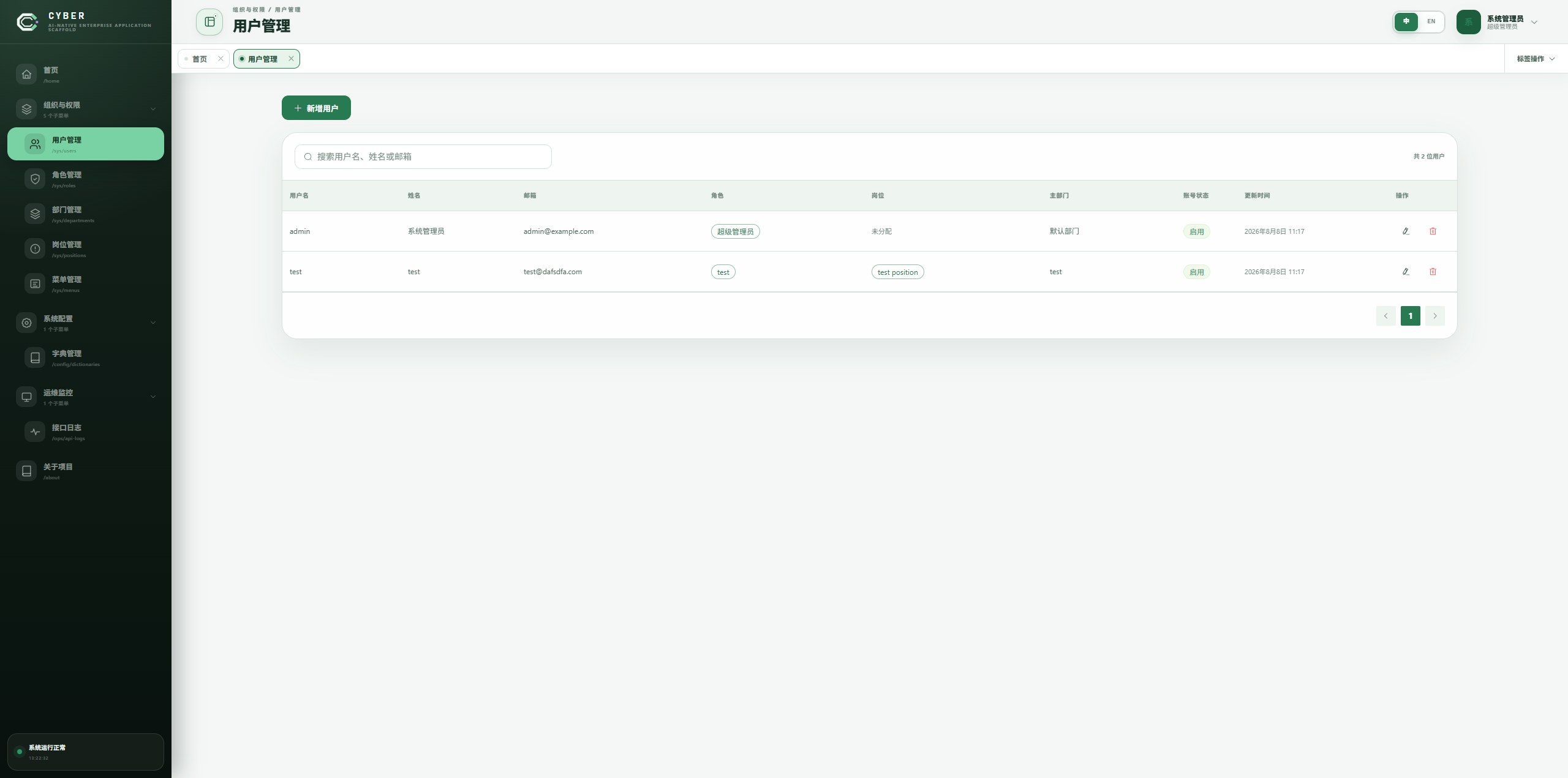
Users, departments, positions, and lifecycle state organized as explicit system capabilities.
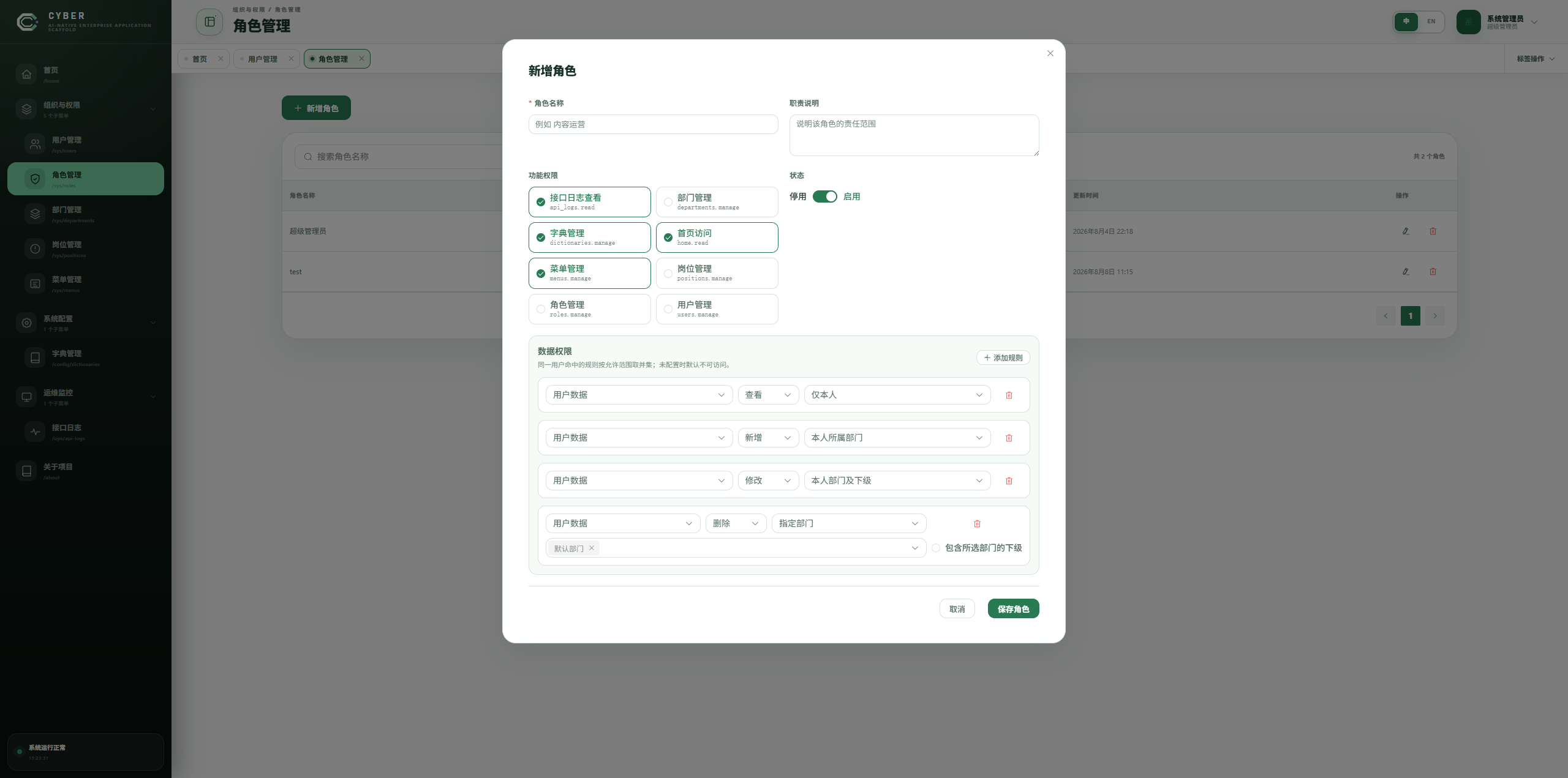
Stable permission keys and data scopes make access decisions visible, testable, and replaceable.
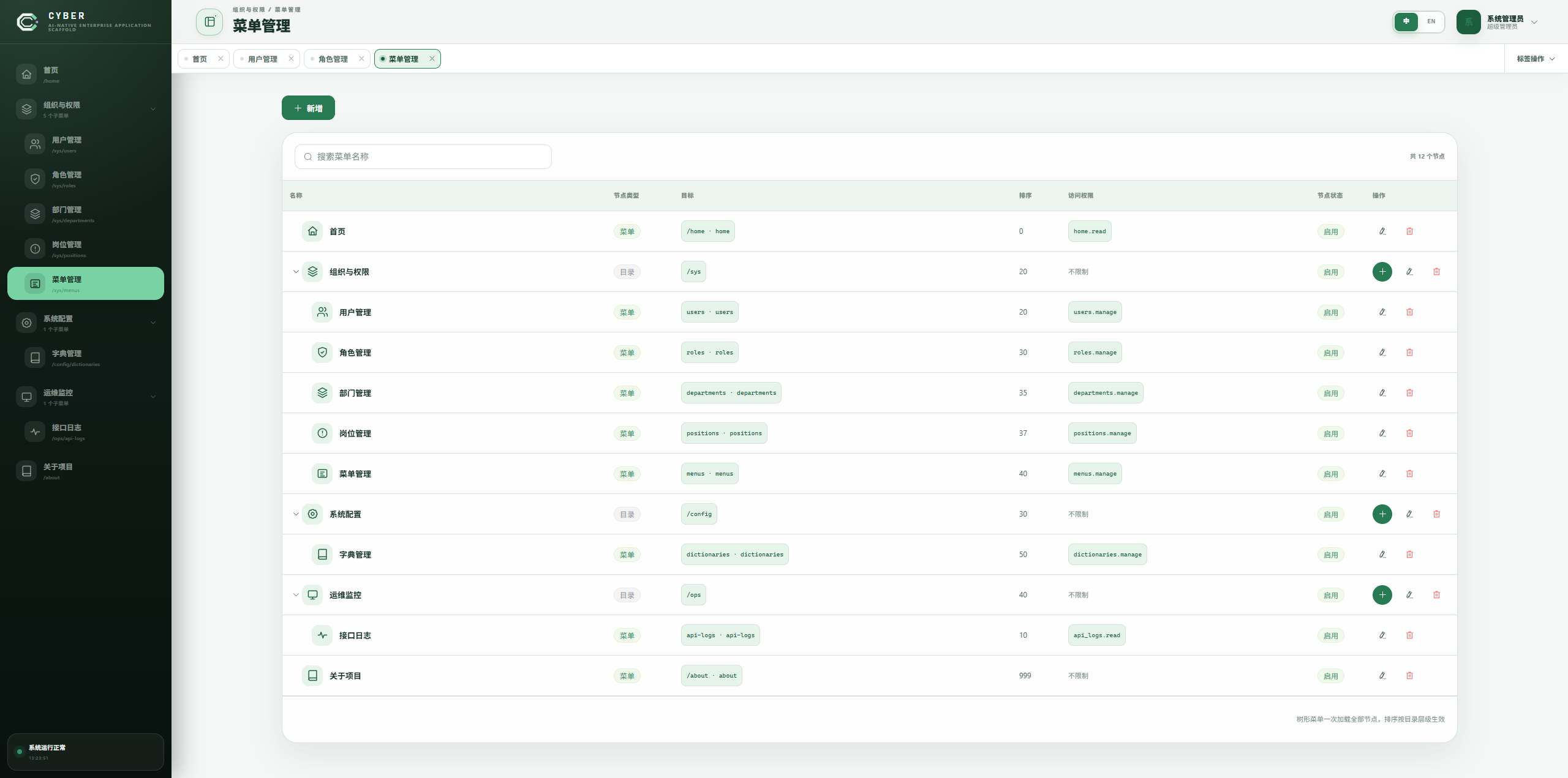
Menus become controlled product structure, not scattered route guesses or hard-coded component paths.
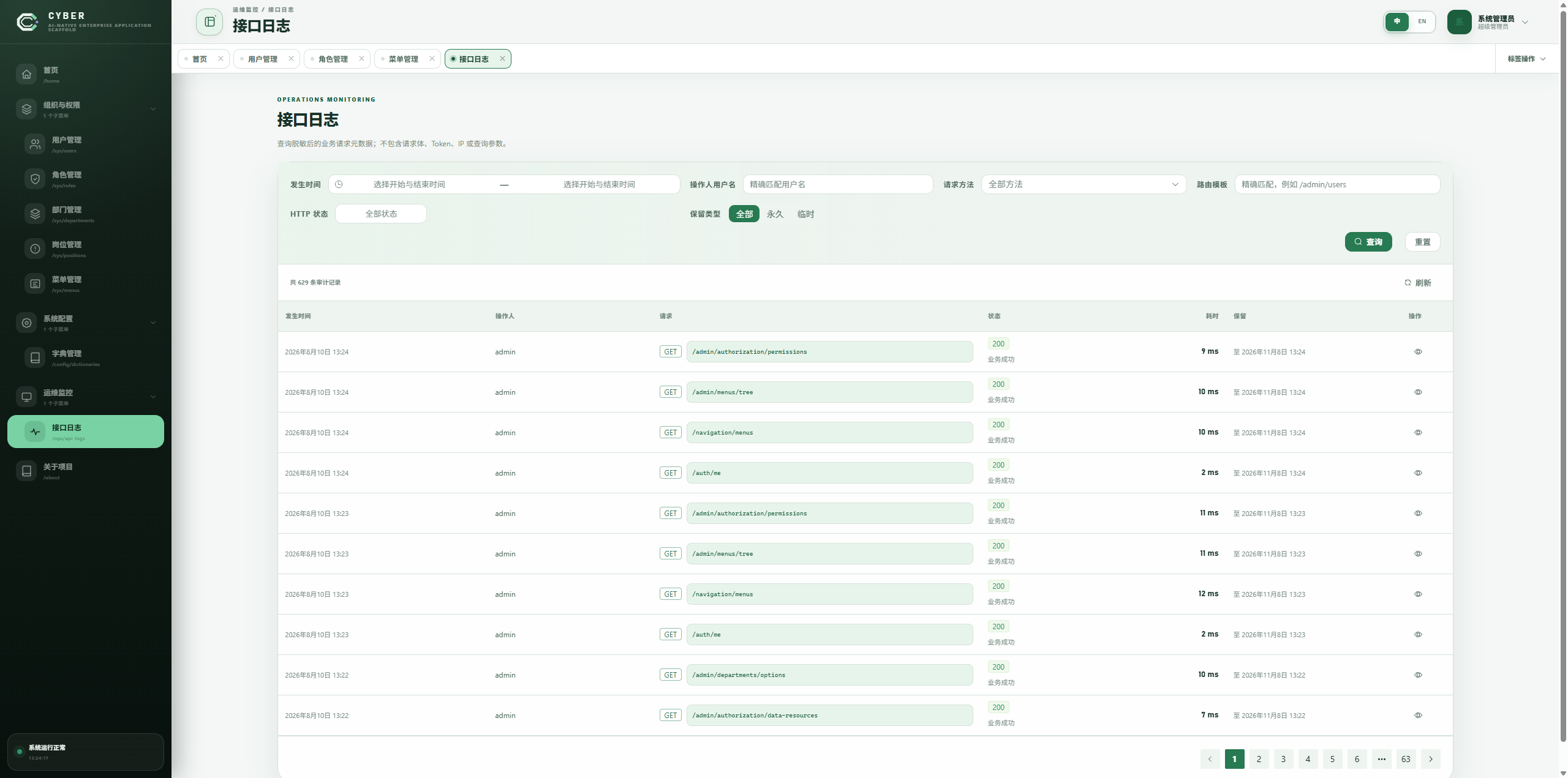
Filterable request records make backend behavior, retention, and response timing visible to operators.
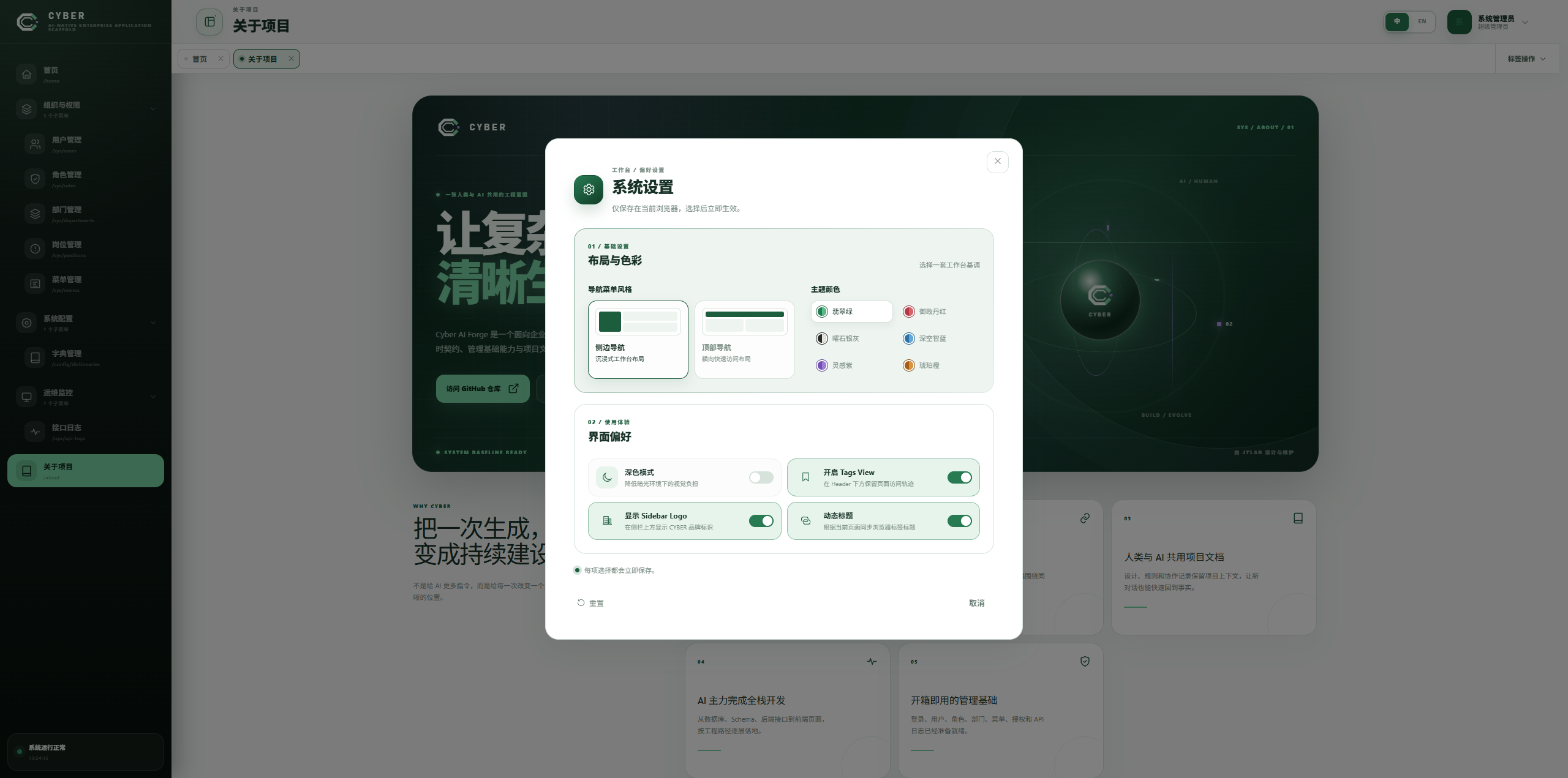
Navigation, theme, tabs, and brand visibility can be tuned from one focused settings surface.
A clear application shell, live system signals, and an extensible home for real business modules.
Cyber turns a capable AI into a reliable project collaborator by making the engineering environment explicit.
Stable module names, public files, and one-way dependencies.
New capability has a known home before code is written.Human and AI documentation describe the same current system.
The repository—not the latest chat—is the source of truth.Zod schemas stay alive at the HTTP boundary.
Types, validation, responses, and OpenAPI evolve together.Authentication, users, roles, menus, dictionaries, and API logs for an admin dashboard.
Start with the repetitive foundation already working.Design gates and explicit module ownership resist architecture drift.
Complexity grows inside clear boundaries instead of leaking everywhere.Contracts and backend rules are backed by automated checks.
Frontend behavior keeps a clear human acceptance boundary.A human explains the application, users, and business rules in ordinary language.
AI loads the repository rules, current designs, module boundaries, and active plan.
Schema, API, backend, database, and interface are implemented as one traceable flow.
Checks run, human-facing behavior is accepted, and decisions return to repository memory.
The stack is familiar. The difference is how deliberately every layer is connected and documented.
Frontend types are inferred. Nest validates requests and responses at runtime. OpenAPI metadata is generated from the same route contracts.
Bring the idea and make product decisions. Let AI handle more of the full-stack implementation without requiring you to first become a professional developer.
Reuse the enterprise foundation, keep frontend and backend aligned, and let AI work inside explicit architecture instead of improvising around it.
Node.js, pnpm, and a fresh PostgreSQL database are all you need for the local foundation.
$ pnpm install

$ Copy-Item apps/backend/.env.example apps/backend/.env

$ pnpm db:migrate
$ pnpm devStart from a full-stack foundation designed for clear growth, shared truth, and continuous work.
Explore Cyber AI Forge on GitHub↗